



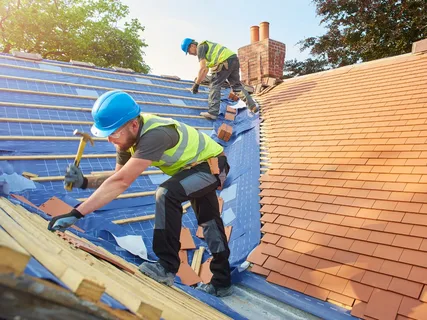
Calgary’s climate destroys roofs faster than almost anywhere else in Canada. Chinook winds can lift the temperature by 15°C in a single afternoon, hailstorms sweep in from the foothills with little warning, and the city sits inside what insurers call hail alley the highest-risk hail corridor in the country. A roof built to a generic national standard rarely survives this environment on schedule. Understanding roof replacement services as their own discipline, separate from routine repair, is the first step toward protecting a home here.
What Roof Replacement Actually Means
Roof replacement is the full removal and rebuild of a roofing system, not the patching of visible damage. The system includes five layers working together: the decking, the underlayment, the ventilation network, the flashing, and the outer surface material. Repair addresses one of these layers in isolation. Replacement rebuilds all five as a coordinated unit, which is the only way to reset a roof’s service life back to zero.
The trigger points for replacement over repair are fairly consistent across the industry. A roof between 15 and 20 years old has usually lost enough granule protection and flashing integrity that repair becomes a temporary fix rather than a solution. Hail or wind damage affecting more than 25–30% of the surface area crosses the same threshold — at that point, insurers and contractors alike typically classify the roof as a replacement case rather than a repair case.
Why Insurance Treats Replacement Differently Than Repair
Alberta insurers require documented proof of end-of-life condition before approving a full replacement claim instead of a partial payout. This documentation isn’t optional paperwork — it’s the mechanism that determines whether a homeowner receives coverage for one damaged section or for the entire roof. An independent roof inspection report, photographed decking condition, and a materials assessment from a licensed contractor form the evidence base insurers ask for. Homeowners who skip this step and go straight to a repair estimate often end up paying out of pocket for work insurance would have covered.
The Five Components That Determine Whether a Replacement Lasts
Decking
Decking is the plywood or OSB layer beneath the shingles, and it’s the component most often ignored during a quick estimate. Ice damming forces meltwater under the shingle line every winter, and over years that moisture rots sections of decking invisibly. Installing new shingles over compromised decking shortens the new roof’s lifespan regardless of the material quality above it. A contractor who doesn’t physically inspect the decking during tear-off — not just visually from the attic — is skipping the step that determines whether the roof installation actually solves the underlying problem.
Underlayment and Ice-and-Water Shield
Underlayment is the moisture barrier installed directly on the decking before the final surface material goes down. Alberta’s building code guidance calls for synthetic underlayment across the full roof, paired with a self-adhering ice-and-water membrane at the eaves, valleys, and any roof-to-wall transitions — the exact zones where freeze-thaw cycling causes the most repeat damage. This membrane is what prevents the ice damming described above from reaching the decking in the first place.
Material Selection
Material choice in Calgary is a durability decision before it’s an aesthetic one. Standard asphalt shingles remain the most common choice because of cost and reasonable impact resistance, but Class 4 impact-resistant shingles and standing-seam metal roofing have gained ground specifically because of hail exposure. Metal roofing carries a higher upfront cost but a meaningfully longer service life and stronger hail performance, which matters in a city where a single severe hailstorm can total a standard asphalt roof in under ten minutes. The right material depends on the home’s exposure, the roof’s pitch, and the homeowner’s time horizon — not on whichever option a contractor happens to stock.
Ventilation
Ventilation is the component most homeowners don’t think about and the one most responsible for premature roof failure in this climate. Balanced intake at the soffits and exhaust at the ridge keeps attic temperature close to outdoor temperature, which prevents the snow-melt-and-refreeze cycle that causes ice damming at the eaves. A roof with poor ventilation will develop ice dams even with a brand-new underlayment system, because the root cause — trapped attic heat — was never addressed. Ridge and soffit ventilation should be checked and corrected as part of every full replacement, not treated as an optional upgrade.
Flashing and Roof Penetrations
Flashing seals the joints where the roof meets chimneys, vents, skylights, and walls, and these joints are the single most common failure point on any roof, regardless of shingle age. Metal flashing fatigues and separates over time, and reusing old flashing during a replacement is one of the most common shortcuts that leads to leaks within the first two winters. A complete replacement always includes new flashing at every penetration point, not a reinstallation of the existing metal.
What Drives the Cost of a Calgary Roof Replacement
Roof replacement pricing in Calgary is determined by a narrower set of variables than most homeowners expect, and understanding them makes it possible to evaluate a quote rather than simply compare a bottom-line number:
- Roof size and pitch — steeper roofs require additional safety equipment, slower installation, and more labour hours per square.
- Material tier — the gap between standard three-tab asphalt and Class 4 impact-resistant or metal systems is the single largest line item in most quotes.
- Existing layers — a roof with two or three layers of old shingles costs more to tear off than a single-layer roof, and Alberta code limits how many layers can legally remain before a full tear-off is mandatory.
- Decking condition — rot discovered during tear-off adds material and labour that a surface-level quote cannot predict in advance.
- Permits — the City of Calgary requires a building permit for most residential roof replacements, and a contractor who pulls this permit correctly avoids inspection delays and future resale complications.
A written, itemized estimate that breaks out these variables individually is the mark of a contractor operating transparently. A single lump-sum number, without a materials and labour breakdown, is the most common source of disputes once work is underway.
Evaluating a Contractor: The Details That Actually Matter
Alberta’s roofing market includes a recurring pattern after every major hailstorm: seasonal or unlicensed crews appear, complete rushed work, and disappear before warranty issues surface months later — which is exactly why trusted roofing services are worth the extra diligence to find. Three checks separate an established contractor from this category. First, confirm active business licensing and liability insurance directly, not just a claim on a website. Second, confirm manufacturer certification for the specific shingle or metal system being proposed — certification affects whether the manufacturer’s own warranty is valid at all. Third, request a workmanship warranty that is separate and distinct from the material manufacturer’s warranty.
This distinction between the two warranty types is one most homeowners overlook. A manufacturer’s warranty covers defects in the shingles or metal panels themselves — a genuinely rare failure point. A workmanship warranty covers installation errors: incorrect nailing patterns, improperly sealed flashing, or ventilation that was never properly tied in. Installation error, not material defect, is the more common cause of premature roof failure in Calgary, which makes the workmanship warranty the more consequential document to review before signing.
Timing the Project Around Calgary’s Weather
Calgary roofing crews operate primarily from late April through October. June through September offers the most consistent daytime temperatures for asphalt shingle installation, since the seal strip on modern shingles needs sustained warmth to bond correctly — installation in cold or inconsistent weather can leave shingles unsealed going into winter. Homeowners who notice granule loss in the gutters, curling shingle edges, or light penetration in the attic during a spring inspection should schedule an assessment early in the season. Reputable contractors book their calendars quickly once hail season begins in late May, and waiting until visible leaks appear often means choosing from whichever crew still has availability rather than the most qualified one.
The Bottom Line
A roof replacement is one of the few home improvements where the finished appearance and the underlying performance are almost completely disconnected from each other. A roof can look flawless on installation day and still fail within two or three winters if the decking was compromised, the ventilation was never balanced, or the flashing was reused instead of replaced. Calgary’s freeze-thaw cycles, hail frequency, and chinook swings leave no margin for shortcuts in any of these areas. Working with a licensed, locally established contractor — one willing to document decking condition, itemize costs, and stand behind the installation with a separate workmanship warranty — remains the difference between a roof that performs for two decades and one that needs early roof repair or a second full replacement well ahead of schedule.